

A comprehensive guide to hotel reception and lobby equipment: How to create the perfect first impression

Table of contents

Introduction: Why the first impression in a hotel matters more than anywhere else
In the dynamic world of hospitality, there is a concept known as the “moment of truth”. It is that brief moment when a guest first walks through your doors and subconsciously forms a judgment about the quality of your services, cleanliness, and professionalism. It is precisely the hotel lobby and reception where this story begins.
Investing in high-quality hotel reception equipment is not only a matter of aesthetics, but above all of functionality and operational efficiency. A well-designed space can eliminate queues, increase security, support the sale of additional services, and above all ensure that guests feel welcome. In this guide, we will take a detailed look at which elements should not be missing in a modern entrance area and how to choose them with regard to long-term sustainability and guest satisfaction.
Reception desk: The heart and brain of the hotel
The reception desk is the most important piece of furniture in the entire hotel. It must meet demanding requirements for staff ergonomics while also being accessible and welcoming for guests.
Ergonomics and desk height
A standard reception desk usually consists of two levels. The upper counter for guests (at a height of approx. 110–120 cm) is used for signing documents and placing hand luggage.
The working surface for the receptionist (at a height of 72–75 cm) must provide sufficient space for a computer, key card printer, telephone, and administrative needs.
Materials and durability
Due to the high frequency of use, choose materials that are resistant to scratches and easy to maintain. High-pressure laminate (HPL), engineered stone, or solid wood with a high-quality surface finish are popular choices. Do not forget integrated cable grommets to prevent technology from looking chaotic.
Technological equipment for reception efficiency
- Key management system: Whether you use classic keys or modern key cards, the storage system must be clear and secure.
- Payment terminals and cash drawers: Secure cash storage and fast contactless payments are a standard guests expect.
- Information kiosks: In modern operations, self-service kiosks complement the reception and allow guests to check in without waiting, which is ideal for business hotels.
Lobby as a multifunctional comfort zone
Hotel lobbies are no longer just “waiting rooms”. Today they serve as workspaces, places for informal meetings, or relaxation with a cup of coffee.
Seating furniture and layout
Variety is key. Combine comfortable armchairs for privacy with larger sofas for groups. If you target business clientele, do not forget tables with access to power outlets and USB ports. High-quality upholstery with high abrasion resistance (Martindale over 50,000) is essential for hotel equipment.
Lighting and atmosphere
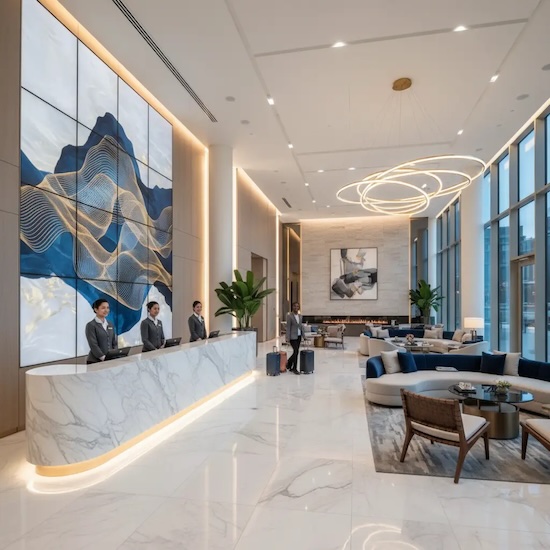
Lighting should be layered. Bright light above the reception desk for good document readability and dimmer, warm ambient lighting in the lobby relaxation area. Designer lighting fixtures in the lobby often serve as a central aesthetic element that defines the hotel’s style.
Essential accessories for professional service
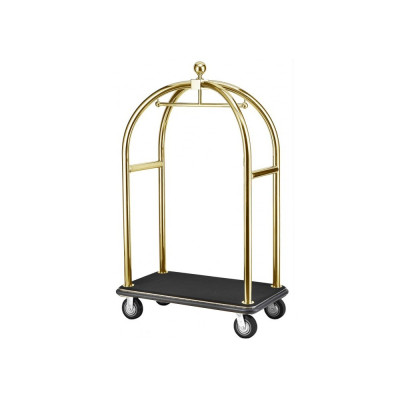
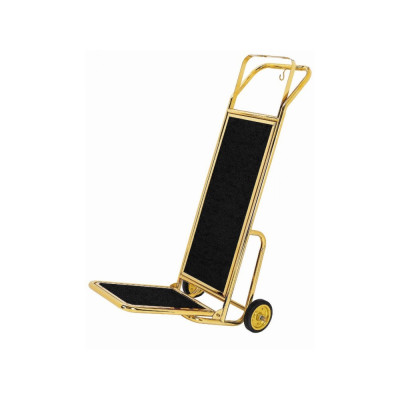
- Luggage carts: They must be quiet (rubber wheels), stable, and representative.
- Umbrella stands and shoe cleaners: Practical elements that guests appreciate especially in bad weather and that also help keep floors clean.
- Information boards and navigation: Clear signage directing guests to elevators, restaurants, or wellness areas reduces confusion and eases the burden on reception staff.
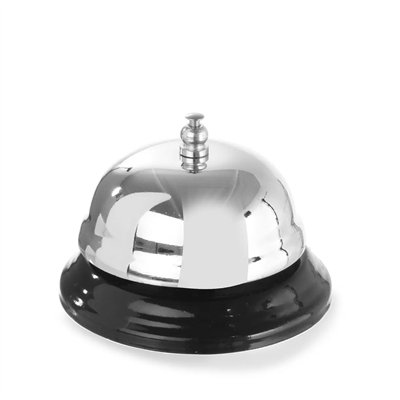
- Reception bells and small essentials: Even in the digital age, the classic reception bell still has its place as a symbol of service availability.
Hygiene and cleanliness of entrance areas
- Cleaning zones: High-quality entrance mats and cleaning carpets can capture up to 80% of dirt from outside.
- Waste bins: Choose designer pieces that match the interior, ideally with waste sorting functions, which emphasize the ecological mindset of your establishment.
- Disinfection dispensers: Even after the pandemic, they remain a hygiene standard. Elegant touchless stands integrated into the lobby design look professional.
Step by step: How to optimize your reception area
- Guest flow analysis: Observe where guests arrive, where queues form, and where people naturally sit. Adapt furniture placement accordingly.
- Defining style and materials: Choose materials that reflect your brand (e.g. luxurious marble vs. industrial metal) and are certified for commercial use.
- Selecting an ergonomic desk: Consult desk height and layout with your employees. A satisfied receptionist performs better.
- Technology integration: Plan electrical and data wiring before ordering furniture. Hidden cabling is the foundation of aesthetics.
- Creating an “Instagrammable” spot: Create one area in the lobby (a logo wall, unique armchair, artwork) that guests will want to photograph and share on social media.
FAQ: Frequently asked questions about reception equipment
What is the ideal reception desk height for barrier-free access? For guests in wheelchairs, at least part of the desk should be lowered to a height of 75–80 cm with sufficient legroom underneath.
What lighting is best for a lobby? We recommend a combination of warm white light (2700K–3000K) for relaxation zones and neutral white light (4000K) for the reception work area.
How to choose durable textiles for lobby furniture? Look for fabrics with a high Martindale rating (abrasion resistance) and easy-clean finishes (e.g. nanotechnology or AquaClean).
Is it necessary to have a TV in the lobby? Modern hotels are moving away from TVs in lobbies in favor of calm music or digital information panels displaying weather, transport departures, or hotel offers.
What are the color trends for 2025? Natural tones dominate – sage green, terracotta, and warm shades of gray, complemented by elements of biophilic design (live plants and wood).
Hotel reception and lobby equipment is not just a cost item in the budget. It is a strategic tool that influences overall guest satisfaction and their willingness to return. High-quality hotel equipment in these areas sends a clear signal: “We care about your comfort and we are professionals.” When selecting elements, always ask whether they make staff work easier and increase guest comfort. If you find the balance between these two aspects, you will create a space that represents your hotel in the best possible light.
Related Products
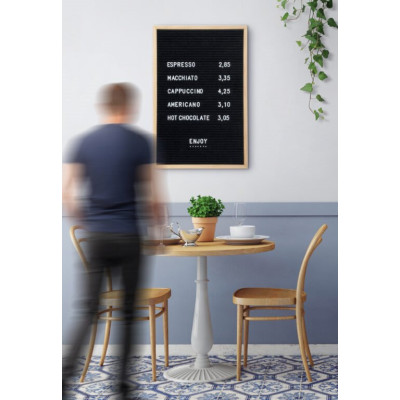
Slide-in board 60x80cm with 252 plastic letters, numbers and symbols